
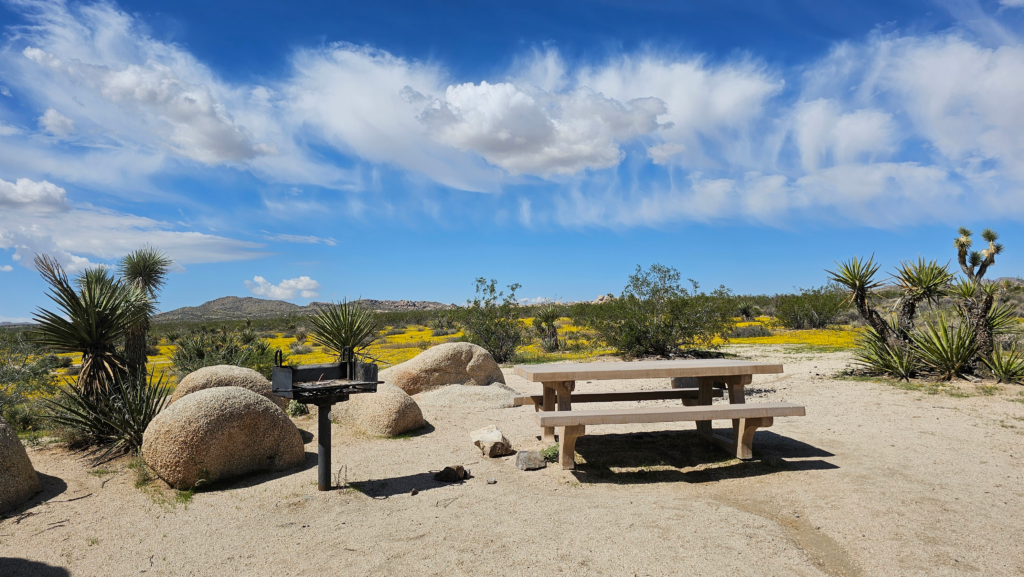
Why Camp in Joshua Tree 🏕️
With nearly 500 campsites spread across a handful of campgrounds, Joshua Tree offers a variety of camping experiences — from more developed, amenity-filled sites to primitive, first-come first-served “desert under the stars” options.
No matter your preference, it’s a chance to sleep among the unique Joshua trees, granite boulders, starry desert skies, and enjoy easy access to climbing routes and hiking trails.
Reservation Only Campgrounds:
Black Rock Campground
Why choose it: Among the most “established” campgrounds in the park — it offers potable water, flush toilets, and a dump station.
What to expect: 99 individual sites. Elevation around 4,000 ft. Some shade from Joshua trees, a mix of sun & shade, making it relatively comfortable compared to more exposed desert sites.
Good for: RVs or campers wanting a “full-service-ish” site (even though there are no hookups), people coming with gear, families, or first-time desert campers who want some comforts.
Heads-up: No electrical hookups; but water and dump station help a lot. Remote enough to feel “in nature,” but close enough to town amenities (e.g. nearby Yucca Valley) for things like resupply or laundry.
Cottonwood Campground
Why choose it: It’s the campground located in the southern section of the park — useful if you plan to explore the southern desert areas or want a quieter, more remote stay.
What to expect: 62 campsites, with potable water and flush toilets provided. Reservation required.
Good for: Campers who want a reliable facility and prefer a southern-entrance base, maybe combining camping with exploring lower-elevation or southern trails.
Heads-up: As with all park campgrounds, no hookups (electric/water/sewer). Even though there is “amenity-level” infrastructure, you’ll want to bring plenty of water and supplies.
Indian Cove Campground
Why choose it: Great for campers interested in climbing — Indian Cove sits right among amazing rock formations and climbing routes that the park is known for.
What to expect: Around 101 sites (or 97, depending on listing), reservation required, flush toilets and potable water available (or at least at ranger station/nearby resources) for convenience.
Good for: Climbers, small groups, couples or solo adventurers who want the “rock + remote feel” but with some amenities.
Heads-up: As with many campgrounds in Joshua Tree: no hookups. Water may be limited to specific points — always check ahead and bring extra. Summer heat, desert conditions, and limited shade may be a factor, depending on season.
Jumbo Rocks Campground
Why choose it: Located centrally in the park among the massive granite boulders and rock formations Joshua Tree is famous for — a classic “desert-rocks + camping” vibe.
What to expect: 124 campsites (the largest campground in the park). Reservation required. No water or hookups inside the campground.
Good for: Tents or smaller RVs, rock-climbing or bouldering enthusiasts, campers who want to sleep among the rocks & have quick access to trails and iconic desert landscapes. Families or groups wanting a central base with easy access to the heart of the park.
Heads-up: Because there’s no water, you’ll need to bring enough for your stay (especially in hotter months). Summer can be very hot — many people visit in cooler months (spring, fall, winter).
Ryan Campground
Why choose it: Offers a more “open desert” camping experience compared to rocky-boulder campgrounds, suitable for those who want a quieter, simpler stay.
What to expect: 31 campsites (plus some equestrian / group / bicycle-site options), reservation required. Potable water and flush toilets available.
Good for: Campers who prefer space, simpler surroundings, maybe stargazing — also good if you’re bringing horses (there are equestrian sites) or traveling by bicycle.
Heads-up: Desert conditions: no hookups, and water may be limited — plan accordingly. Because it’s more “open,” expect desert wind and temperature swings.
First-Come First-Serve Campgrounds:
Hidden Valley Campground
Offers a classic “camp among the rocks” experience — great for climbers or people looking for that quintessential Joshua Tree vibe.
No water, no hookups. Bring plenty of water and supplies. Bathrooms are primitive (pit toilets).
Great for adventurous campers who are okay with minimal amenities and want flexibility over reservations, or arrive spontaneously.
Belle Campground
Small campground (~18 sites)
Very primitive — vault toilets, fire grates, picnic tables. No water.
Good for travelers with tents, experienced desert campers, or those looking for solitude and simplicity.
White Tank Campground
Smaller and more primitive.
No potable water or hookups. Vault toilets, fire pit and picnic table only.
Good for light-pack tent campers, minimalist trips, or for people comfortable with basic desert camping conditions.
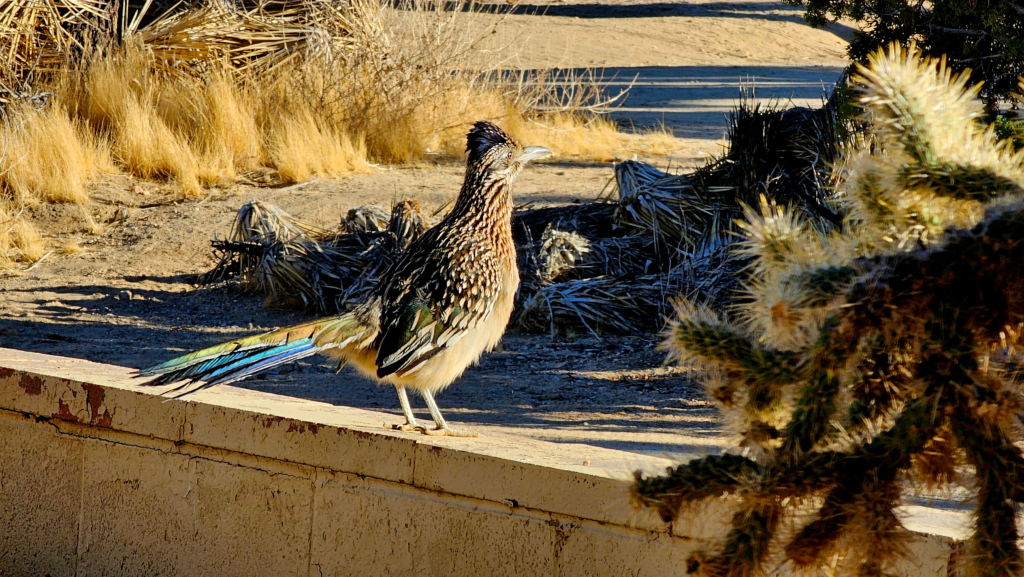
Interested to know what wildlife you might see on your Joshua Tree adventures? Here’s your guide to wildlife commonly seen in the park: What Wildlife can be seen in Joshua Tree National Park?
I hope this information helps you have an amazing trip to Joshua Tree! If you found this article helpful or had a question, please don’t hesitate to comment. And remember to have fun, stay safe, and never give up on your travel dreams!